

The Rumbaugh Lab
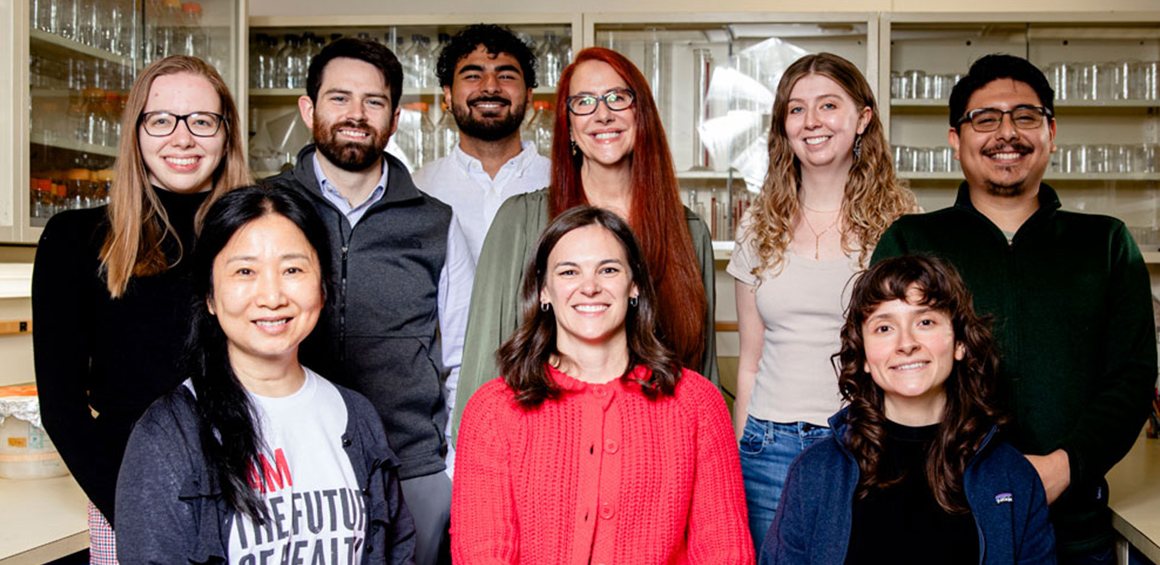
Over Two Decades of Research in Bacterial Pathogenesis & Wound Infection Models
Our research is focused on bacterial pathogenesis in acute and chronic wound and soft tissue infections. We have over 20 years’ experience investigating bacterial pathogenesis utilizing rodent wound models, and our group has made seminal contributions towards our understanding of the roles quorum sensing and biofilms play in vivo. Our laboratory also has expertise in investigating how polymicrobial interactions and bacterial biofilms affect pathogenesis and modulate innate immune responses in the local wound environment and our most recent work has focused on exploiting biofilm dispersal to treat wound infections. We have performed numerous efficacy studies of antimicrobial and antibiofilm compounds for academic collaborators and private companies, the data for which have been used to justify Phase II clinical trials.
Polymicrobial interactions and Biofilm Formation in Chronic Wounds
The impact of wound infections on our healthcare system is enormous. In fact, chronically-infected
diabetic foot ulcers are considered the most significant wound care problem in the
world. One major reason that these infections are so difficult to treat is because
bacteria develop ‘biofilms’ after they colonize wounds. A biofilm is a slimy, sugar-rich
structure that encases bacteria and protects them from the immune response and antimicrobials,
making them up to 1,000 times less susceptible to killing. The microbial populations
of chronic wounds are complex and can include dozens of major species, yet very little
is understood how interactions between these species influence the course of infection
or affect therapeutic success. We have developed polymicrobial wound models in order
to investigate how different species in wounds work together to build better biofilms
and create more difficult to treat infections.
Pseudomonas aeruginosa Pathogenesis in Wounds
Infection with the Gram-negative pathogen Pseudomonas aeruginosa is one of the major
causes of morbidity and mortality in severely burned patients, and the cause of debilitating
chronic infections in diabetic patients. P. aeruginosa relies on an arsenal of cell-associated
and secreted virulence factors to colonize and infect its host, and it persists and
invades the immune system by building biofilms.
In collaboration with Marvin Whiteley’s group, http://whiteleylab.biosci.gatech.edu/?q=home, we are using advanced genomic approaches to understand the pathogenesis of P. aeruginosa in human wounds and mouse models that recapitulate disease.
Necrotizing Soft Tissue Infections
Necrotizing soft tissue infections (NSTIs) are a group of infections that are rapidly
progressive and require immediate surgical intervention. The pathogenesis and microbiology
of these infections are understudied, which partially explains the relatively stagnant
and high mortality despite aggressive surgical and medical treatments. We have recently
shown through human metagenomics studies that obligate anaerobes are abundant in NSTIs
and are associated with a worsened prognosis. Currently, we are focused on better
understanding the polymicrobial interactions behind NSTIs through the study of model
organisms, Staphylococcus aureus and Bacteroides fragilis. We hypothesize that microbial
interactions that contain obligate anaerobes cause a worsened NSTI compared to those
with facultative anaerobes alone.
Development of Biofilm Degrading Agents
Biofilms are communities of microorganisms protected by a thick, self-synthesized
extracellular matrix of polysaccharides, proteins, lipids and extracellular DNA. As
much as 85% of all bacterial infections are biofilm-associated, compounding the problem
of rising antibiotic resistance by offering the resident microbes greatly increased
tolerances to antimicrobials. We are tackling this problem by developing agents that
degrade the protective extracellular matrix, thereby augmenting the effectiveness
of existing antimicrobial agents. We have shown that biofilm polysaccharides can be
degraded by enzymes that hydrolyze the glycosidic bonds between the individual sugar
moieties, thereby causing the structural collapse of the biofilms, and potentiating
the action of antibiotics against the newly liberated bacterial cells in vivo. Currently,
we are working on optimizing enzymatic to break down the biofilms present in complex,
polymicrobial, clinical infections in a broad-spectrum manner. In doing so, we hope
to be able to create a widely-applicable topical treatment that can greatly increase
the effectiveness of existing antibiotics, reversing some of the devastating effects
of antibiotic resistance on the healthcare field.
Preclinical Efficacy Testing of Experimental Antimicrobials
We have developed several in vitro and in vivo wound models with which to test experimental
antimicrobials and anti-biofilm agents. We have extensive experience in working with
companies and academic collaborators to test the efficacy of new therapeutics.
Interkingdom signaling between P. aeruginosa Quorum Sensing Molecules and Host Cells
Quorum sensing (QS) is a cell density-dependent signaling process used by many bacteria
to coordinate gene expression in a population. QS in Gram-negative bacteria is controlled
by diffusible molecules called autoinducers (AI) that function as ligands for regulatable
transcription factors. At least two separate QS systems exist in P. aeruginosa, the
LasI/LasR and RhlI/RhlR systems. The ligands for LasR and RhlR are N-3-oxododecanoyl-
and N-butyryl- homoserine lactones, or PAI-1 and PAI-2, respectively. Several studies
indicate that bacterial autoinducers, and PAI-1 in particular, can also influence
gene expression in host eukaryotic cells, a process we’ve termed interkingdom signaling.
We hypothesize that this regulatory process involves autoinducer receptor molecules
in the host cells, possibly transcription factors. We have shown that P. aeruginosa
autoinducers can efficiently enter mammalian cells and modulate gene expression potentially
through the interaction of nuclear hormone receptors. In addition, we have also recently
shown that the nematode C. elegans can sense bacterial autoinducers and use this sensory
information to ‘learn’ to avoid pathogens.
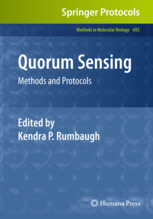
Quorum Sensing: Methods and Protocols
Since its early days in the 1990s, the Quorum Sensing (QS) field has grown from a few dozen laboratories, investigating the pathways, proteins, and chemicals that facilitate signaling in bacteria, to hundreds of groups that have integrated evolutionary biology, computer science, mathematics, engineering, and metagenomics to create an ever-expanding and dynamic field. In Quorum Sensing: Methods and Protocols, expert researchers provide an in-depth set of diverse protocols that span this broad area of study.
Broken into three detailed sections, the volume covers the detection, isolation, and characterization of the QS signals made by both Gram- and Gram+ bacteria, determination of the function of QS signals in vivo, and the development of QS disruption strategies. Written in the highly successful Methods in Molecular Biology™ series format, chapters include brief introductions to their respective topics, lists of the necessary materials and reagents, step-by-step, readily reproducible laboratory protocols, and expert tips on troubleshooting and avoiding known experimental pitfalls. Comprehensive and cutting-edge, Quorum Sensing: Methods and Protocols serves as an invaluable collection of easily accessible techniques for scientists seeking to further our knowledge about bacterial communication and its relation to humanity.
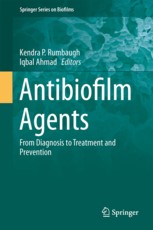
Antibiofilm Agents: From Diagnosis to Treatment and Prevention
This book provides a survey of recent advances in the development of antibiofilm agents for clinical and environmental applications. The fact that microbes exist in structured communities called biofilms has slowly become accepted within the medical community. We now know that over 80% of all infectious diseases are biofilm-related; however, significant challenges still lie in our ability to diagnose and treat these extremely recalcitrant infections.
Written by experts from around the globe, this book offers a valuable resource for medical professionals seeking to treat biofilm-related disease, academic and industry researchers interested in drug discovery, and instructors who teach courses on microbial pathogenesis and medical microbiology.
View the most recent publications here.
- Career Crossroads Lead to Research Triumph
- Rumbaugh Named Fellow by American Academy of Microbiology
- NIH Grant to Aid Rumbaugh’s Biofilm Dispersal Research
- Rumbaugh’s Research Yields Possible Biomarker and More Effective Biofilm Dispersal
- Rumbaugh Named 2023 Fellow by American Association for the Advancement of Science
Got Questions?
We're here to help. Contact us if you have questions.
Kendra Rumbaugh, PhD
Director, Burn Center of Research Excellence (BCoRE)
Phone: 806.743.3684
Fax: 806.743.2113